Troon Venue Set for Legendary Fortnight
September 14, 2026
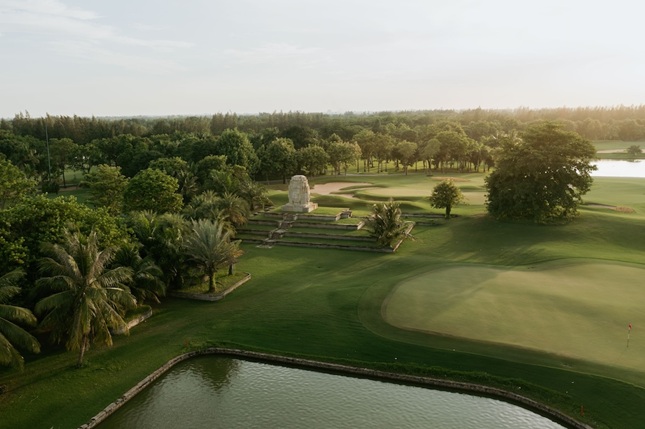
Phnom Penh, Cambodia: Vattanac Golf Resort will welcome the Staysure Legends Tour back to Cambodia, with the Troon-manag...

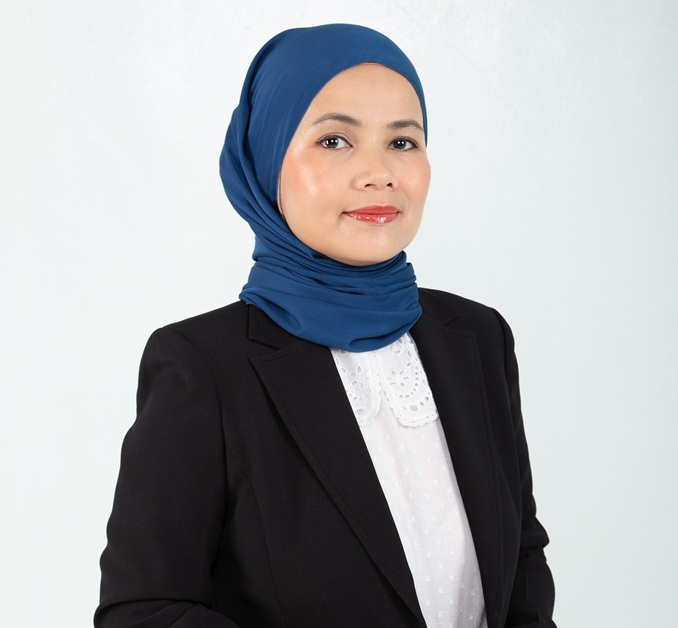
Singapore: Early this year, Jebsen & Jessen Technology Managing Director Philipp Hoffmann laid out the strategic case for sustainable golf course management across tropical Southeast Asia. In an all-encompassing Q&A, Sarina Shafiee, Country Manager for Malaysia, brings that conversation closer to the ground – to the courses, the customers, and the daily realities of putting sustainability into practice in one of the region’s most active golf markets.
Q: Philipp Hoffmann’s article opened with the image of a superintendent standing at the edge of the 18th green at dawn, calculating rainfall odds. How much does that resonate with the customers you work with in Malaysia?
Sarina: It resonates deeply – and I think that’s exactly why that image works so well. The superintendents I work with in Malaysia don’t experience sustainability as a boardroom concept. They experience it at 5 am when they’re making real decisions about whether to run irrigation ahead of a tournament round, or hold back because the sky is telling them something different from the forecast.
Malaysia’s climate is intense. We are a high-rainfall country, but the distribution is increasingly unpredictable. We can see record rainfall in one quarter and are managing dry stress in the next. The superintendents who are thriving are the ones who have stopped relying purely on experience and intuition and started combining that hard-won instinct with better data and smarter tools. That shift is happening – but it’s not happening fast enough across Malaysia.
Q: Malaysia is one of Southeast Asia’s most established golf markets. Does that maturity make it easier or harder to introduce change?
Sarina: Both, honestly. Maturity is an advantage in the sense that our customers are experienced and very hands-on. They’ve seen enough of the region to know what good looks like. When I walk into a conversation about smart irrigation or precision equipment, there is already a shared language – a common interest in raising standards across the board.
And the challenge with ageing irrigation systems or outdated maintenance equipment is that the cost of staying put accumulates invisibly. You don’t see it in a single line item. You see it in the water bills, the repair costs, the disease pressure that should not be as persistent as it is. And you see it in the people – because attracting and retaining skilled agronomic staff is becoming harder as fewer young professionals see a future working in the field. Reliable, modern systems make that challenge more manageable.
One of the most important parts of our team is helping customers see the full picture – not just the capital cost of an upgrade, but what it actually costs them to stand still. Because the right investment in reliable systems and equipment does not just reduce costs, it creates the conditions for better playing surfaces, stronger membership retention, and improved revenue over time.
Q: Philipp made a strong point in his article that grass selection is an agronomic commitment that shapes maintenance costs and playing quality for 15 years or more. How does that play out in Malaysia specifically?
Sarina: Malaysia is a challenging environment for turf – high UV, high humidity, monsoon flooding in certain regions, and the kind of persistent disease pressure that keeps superintendents up at night. The variety decisions made when a course was built 15 or 20 years ago were made with the knowledge available at the time. Some of those decisions are still working well. Others are now a significant operational burden.
I see more and more customers coming to us not with a product question but with a performance problem. The greens are inconsistent. The disease pressure is relentless. Recovery after heavy play is slow. And when we dig into it, the root cause is often the turf variety … or how it’s being managed. Our role is to bring the agronomic knowledge to that conversation, not just the product.
The good news is that the newer varieties available today – particularly for fairways and tees – offer genuine improvements in heat and drought tolerance. The courses that have been renovated with updated varieties see real, measurable differences in maintenance requirements.
Q: Sustainability is a word that means different things to different people. What does it actually mean to a golf course operator in Malaysia today?

Sarina: For some operators, sustainability is still primarily about optics – the right language in the annual report, a tick on the membership brochure. I understand that. Reputation matters and sustainability is good for brand.
But the operators I find most interesting to work with are the ones who have connected sustainability directly to operational efficiency. For them, sustainability is not a cost – it is a margin improvement strategy. Every litre of water saved is a real saving. Every reduction in chemical application is a real saving. Every machine that runs longer, because it’s properly maintained, is a real saving.
Malaysia’s golf market is competitive. Membership retention, course fees, tournament hosting – all of it depends on the quality of the playing surface. Operators who have made the connection between sustainable management practices and consistent surface quality are the ones winning in this market. That connection is what I spend a lot of my time helping customers make.
Q: Jebsen & Jessen has been operating in Malaysia for 25 years. What has changed the most in how you work with customers over that time?
Sarina: The relationship has deepened significantly. In the early years, the conversation was largely transactional. A customer needs a piece of equipment, we supply it, we move on. That model still exists but it’s no longer sufficient – not for us and not for our customers. Today, the partnerships I value most are the ones built on shared values, a mutual commitment to quality, to doing things properly, and to the long-term health of the industry we both serve.
We know their course. We know their team. We know the history of their infrastructure. When a problem appears – an irrigation fault, an unusual disease outbreak, a piece of equipment behaving unexpectedly – they call us because they know we will show up, professionally, promptly, and with the commitment to finding a solution. That consistency is something we take very seriously.
That kind of relationship takes time, and it takes consistency. Twenty-five years of presence in Malaysia means we have that context with a lot of courses across the country. That is not something a newcomer to the market can replicate quickly and it is something we take very seriously.
Q: Turf Pro Invitational 2026 is coming to Kuala Lumpur in August. What does that mean to you personally and professionally?
Sarina: It means a great deal. Hosting Turf Pro in Kuala Lumpur is a statement – about the strength of the Malaysian market, about the quality of our facilities, and about Jebsen & Jessen’s commitment to this region. Kuala Lumpur Golf & Country Club (KLGCC) is one of the finest golf venues in Southeast Asia. To bring regional professionals together for three days of learning, demonstration and connection is something I am genuinely proud of.
Professionally, it’s an opportunity to show our customers – and the wider industry – what best practice looks like when it is brought together in one place. The breakout sessions, the field demonstrations, the conversations that happen over dinner … that is where real change begins. People leave events like this with new ideas and renewed energy. That matters.
And personally – as the Country Manager for Malaysia – being able to host our regional colleagues here, on our ground, in our market, feels right. We have a strong story to tell about what sustainable turf management looks like in Malaysia, and I look forward to telling it.
Q: What is the one thing you wish more golf course operators in Malaysia understood about sustainable turf management?
Sarina: That it is not about doing less … it is about doing better. I sometimes encounter resistance to the sustainability conversation because there is an assumption that it means cutting back, reducing inputs, accepting lower standards. That is not the reality at all.
The courses in Malaysia that have embraced smart irrigation, structured pest and disease management programmes that prioritise cultural controls over chemical dependency, and well-matched turf varieties are not managing to a lower standard. They are managing to a higher one – with less waste, more consistency, and lower long-term costs.
Sustainability, done properly, is a performance strategy. And in a market as competitive as Malaysian golf, performance and experience are everything – for the golfer on the course and the operator managing it.
*Sarina Shafiee will be presenting at Turf Pro Invitational 2026 on August 17 in Kuala Lumpur. The event brings together golf course professionals from across Southeast Asia for three days of knowledge-sharing, field demonstrations and the Championship Golf Day at KLGCC. To find out more, visit www.turftech.jjsea.com
**Jebsen & Jessen and Kuala Lumpur Golf & Country Club are members of the Asian Golf Industry Federation.