ASIAN GOLF INDUSTRY FEDERATION

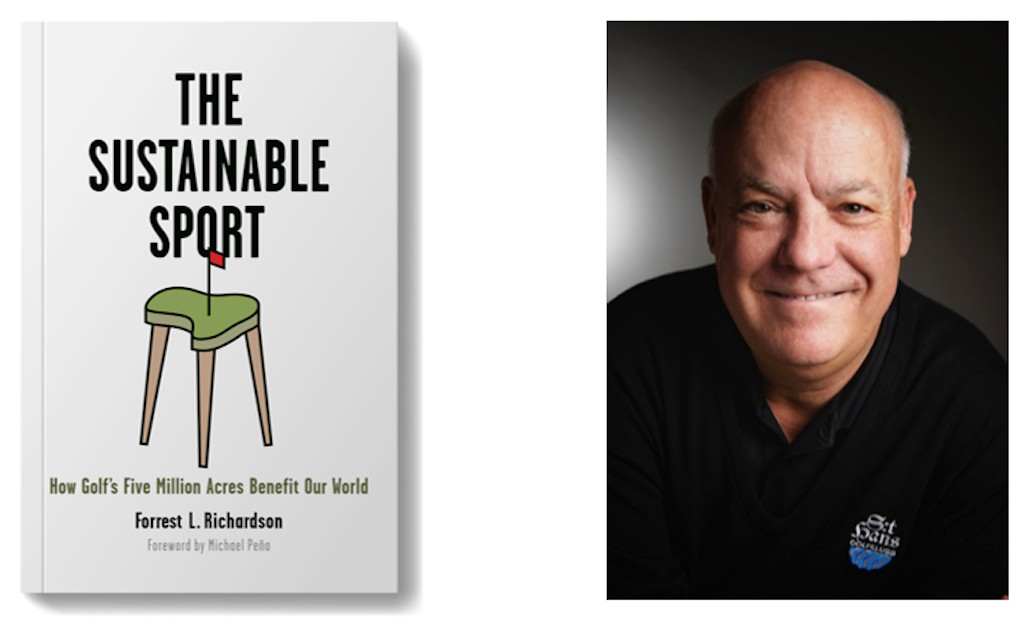
Phoenix, Arizona, United States: As golf faces renewed scrutiny over its environmental impact, a new book argues that the game’s footprint is not only defensible but also measurable, beneficial, and often misunderstood.
The latest spark came from a recent podcast, when Shark Tank investor Kevin O’Leary claimed that golf courses use more water than data centres.
In his new book, The Sustainable Sport, golf course architect Forrest Richardson challenges that claim with evidence of golf’s ecological merits, social value, and economic benefits.
Richardson shows how golf’s five million acres worldwide can benefit communities, economies, and the environment, including how courses interact with water and eco-systems.
Richardson, whose work has focused on golf course design and land planning, said: “While I don’t claim to know much about modern data centres, I do know the measurable value of golf courses. Golf rests on a strong three-legged stool of social, economic, and environmental benefits. Data centres may offer a trade-off, but golf should not be thrown under the bus to defend them.”
Richardson’s new book details how golf courses can filter water from treated wastewater, with much of it returning to the ground scrubbed clean after passing through turfgrass and soil. Some water is absorbed by roots and released through transpiration, while some evaporates before the grass can use it. That is why modern irrigation technology has focused on improving sprinkler efficiency and reducing direct evaporation.
Numerous water use studies are cited to correct common misconceptions, including:
Richardson also noted that golf has spent years responding to sustainability claims with research, measurement, and evolving course-maintenance practices.
Now available for pre-sale, The Sustainable Sport presents a rigorous, fact-based case for golf’s environmental, economic, and social value, drawing on Richardson’s decades of experience as a golf course architect and land planner.
Having designed and studied courses across diverse landscapes, Richardson brings both technical acumen and practical credibility to questions of water use, turf management, eco-system stewardship, and the game’s broader role in communities worldwide.
Richardson also directly addresses golf’s critics, explaining how the game’s nearly 600-year global footprint intersects with world economies, socialisation, and the environment.
The book examines the water cycle, chemicals used on golf courses, how modern course design and maintenance have advanced conservation-minded practices, and why golf’s measurable benefits should be weighed against common misconceptions.
*Pre-sales and order information are available at www.thesustainablesport.com