
Golf Australia Updates Gender Policy
September 10, 2026
Melbourne, Australia: Golf Australia has released an updated Gender Policy, bringing Australian amateur golf into alignm...

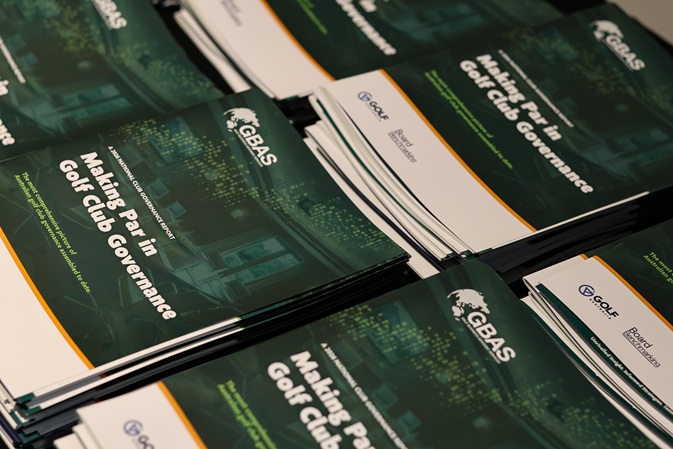
Melbourne, Australia: The most comprehensive governance study ever conducted across Australian golf has found persistent structural challenges, but a clear pathway to improvement.
Golf clubs are big businesses. Collectively, Australia’s top 150 clubs manage revenues approaching A$900 million and assets beyond A$2.4 billion. More than 11,000 volunteer directors govern around 1,300 clubs that cater to over 470,000 members and 1.8 million round players, supporting approximately 30,000 jobs nationally.
Yet a landmark new report has found that many of these clubs are being governed by Boards that don’t fully understand where their role ends and management’s begins.
The 2026 National Club Governance Report – Making Par in Golf Club Governance – surveyed 1,139 leaders from more than 600 clubs across every state and territory. It is the most comprehensive assessment of golf club governance ever conducted in Australia, and its findings paint a picture of an industry with room to grow.
The report’s headline finding is stark: only 57% of golf leaders believe directors clearly understand where the Board’s role ends and management’s begins. It is the lowest-rated governance measure in the study – and has been for three consecutive years.
Almost half (44%) of Boards remain focused on club operations rather than long-term strategy, and only 63% of respondents believe their Board has the right skills and expertise to match current and future strategic needs.
James Sutherland, Chief Executive Officer of Golf Australia, said: “Golf clubs are significant community assets, employers, volunteer-led organisations and increasingly sophisticated businesses managing major infrastructure, people, risk and community expectations.
“This report makes clear that while many Boards are doing a commendable job under real constraints, structural governance weaknesses persist across the industry.”
One of the report’s most revealing findings is the persistent perception gap between directors and management.
Eighty per cent of directors believe their Board is effective – but only 70% of managers agree. That 10-point gap has been consistent across multiple years of research, suggesting it is structural rather than situational.
The gap is even wider on capital planning: 72% of directors believe their Board actively governs long-term capital planning, compared to just 60% of managers.
“Boards are consistently over-estimating how effectively they are performing, and the gap between how directors and managers experience governance is significant,” Sutherland said.
Perhaps the most striking finding is the gulf between volunteer-run clubs and those with professional management structures.
Clubs with paid management score +18 on the report’s strategic balance scale – meaning their Boards are firmly focused on strategy and long-term direction. Fully volunteer-run clubs, by contrast, score between -17 and -19, indicating Boards deeply immersed in day-to-day operations.
It’s a finding that underscores the challenge facing smaller, regional clubs, which made up the majority of respondents, with 74% from regional areas and 51% from clubs with revenue under A$1 million.
Women represent only 20% of survey respondents, with negligible change on prior years. In a sport that has made significant strides in growing female participation – women now make up 60% of new golfers – the Boardroom has not kept pace.
It’s a challenge that sits squarely within the industry’s broader strategic ambition. The Big Swings 2026–2030 strategy commits to 100% of people in the golf community feeling they belong, particularly women and families. That aspiration starts at the top.
Sutherland was clear that the report’s intent is not to impose corporate governance structures on volunteer-led community organisations.
He said: “Importantly, this work is not about making golf clubs more corporate. It is about helping clubs and their leaders build the capability, confidence and structures required to make better long-term decisions, support their communities and harness the significant opportunities currently in front of the game.”
Mark Rigotti, Managing Director and CEO of the Australian Institute of Company Directors (AICD), reinforced the point. He said: “Good governance doesn’t happen by accident. It requires investment in skills, on-going education and a commitment to continuous improvement.
“Strong governance is also central to maintaining an organisation’s social licence. As expectations continue to grow, particularly in areas such as safety, integrity and inclusion, Boards must lead with consistency, transparency and sound judgement.”
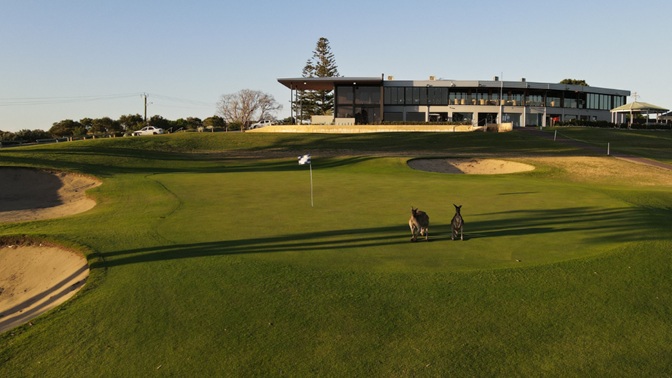
Mandurah Country Club in Western Australia is a clear example of how modern governance can directly support performance, sustainability and long-term growth. Recognised by Golf Australia as the inaugural winner of the Most Outstanding Club, Facility or Place to Play (Metropolitan) award, Mandurah’s transformation has been underpinned by a deliberate shift to stronger governance, clearer strategic planning and long-term decision-making.
In just two years, the club transitioned from a traditional committee structure to a streamlined six-person Board supported by specialist governance sub-committees. This created clearer accountability, faster decision-making and stronger strategic oversight.
That governance reform has delivered significant outcomes on and off the course. Membership has grown beyond 1,200 members, the highest in the club’s history, while the club has recorded an operating surplus exceeding A$940,000 and achieved record participation levels.
Importantly, the stronger governance structure also enabled confidence in long-term investment decisions, including a clubhouse expansion and a fully funded A$2 million irrigation upgrade designed to future-proof the facility and support continued growth.
What makes Mandurah’s story particularly compelling is that its success has not come from changing its culture or community focus, it has come from modernising how the club governs, plans and makes decisions.
The report identifies five priority recommendations for clubs looking to strengthen their governance:
The findings arrive as Golf Australia prepares to expand its national governance education programme. The Golf Australia Club Governance Programme, delivered in partnership with the AICD, trained 775 participants from more than 360 clubs in its pilot year, with 52% reporting that governance practices at their club changed as a direct result.
The programme is set to relaunch on July 21, offering clubs and their leaders a structured pathway to build governance capability.
Jeff Blunden, Managing Director of Golf Business Advisory Services (GBAS), which produced the report alongside Board Benchmarking with support from Golf Australia, said: “We are thrilled to release this report, knowing it will be a highly valued resource for clubs looking to improve their governance practices.
“Australian golf is in a period of unprecedented growth – more than four million Australian adults now play the game in some form annually, and the industry generates billions of dollars in annual community benefits. But growth brings complexity, and complexity demands stronger governance.
The clubs that will thrive in the years ahead are those that invest in their Boardrooms as seriously as they invest in their fairways.”
*The 2026 National Club Governance Report was based on a survey conducted between January and March 2026, with 922 full responses analysed from directors and management leaders across every state and territory.