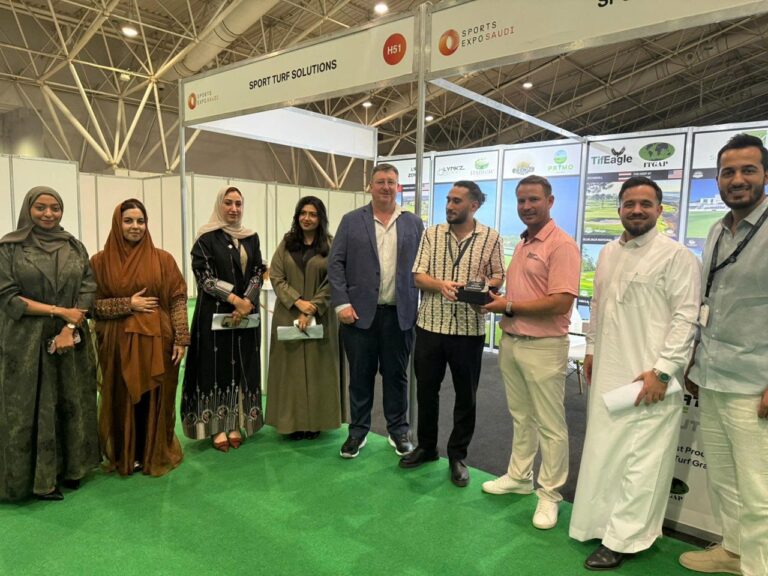
New Independent Director at PGA of America
August 11, 2026
Texas, United States: The PGA of America has named Jeffrey J. Jones II to its Board of Directors as an Independent Direc...

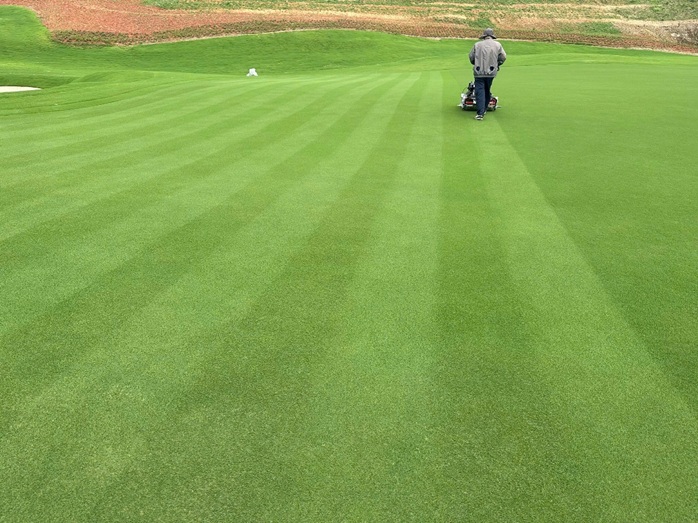
Hanoi, Vietnam: In North Vietnam, the Montaña Golf Project by Olazabal Design’s Toni Ortner stands as a compelling example of how innovative turfgrass selection and precise agronomic execution can elevate golf course quality in challenging climates.
A key contributor to this success has been the establishment of Mach 1 Ultradwarf Bermuda greens – delivering exceptional playability, resilience, and aesthetics that rival traditional cool-season surfaces.
This achievement was made possible through the collaboration and expertise of Jebsen & Jessen Turf and Irrigation and Atlas Turf International, whose combined knowledge and execution played a critical role in the successful delivery of the greens.
North Vietnam presents a unique set of environmental conditions for golf course management. With hot, humid summers and notably cool winter periods, maintaining consistent putting surfaces year-round can be particularly demanding.
While Bentgrass has traditionally been regarded as the benchmark for greens globally, its vulnerability to summer stress in this Southeast Asia region makes it a high-risk, high-input option.
In response, the project team – working alongside Jebsen & Jessen Turf and Irrigation and Atlas Turf – selected Mach 1 Ultradwarf Bermuda, a next-generation Ultradwarf specifically developed to push the boundaries of Bermudagrass performance.
One of the most remarkable aspects of the Montaña Golf Project was the timing of the grow-in phase. The Mach 1 greens were established during the coldest months of the year, with temperatures ranging from lows of 9°C to highs of just 18°C.
These conditions are widely considered outside the optimal range for Bermudagrass establishment. Despite this, the greens achieved successful coverage, density, and uniformity, demonstrating not only strong adaptability, but positioning Mach 1 as a cold-tolerant Ultradwarf Bermudagrass.
This outcome challenges traditional assumptions about Bermuda limitations and highlights its suitability for transition and cooler-edge climates.
The success of the Mach 1 greens was driven by meticulous planning and disciplined execution, led by Jebsen & Jessen Turf and Irrigation and supported by Atlas Turf International. In addition, Cameron Thompson, of Thompson Golf Management, provided initial agronomic support.
Key factors included:
This level of agronomic precision ensured consistent establishment even under climatic constraints rarely associated with Bermudagrass success.
While Ultradwarf Bermudagrasses such as TifEagle, MiniVerde, and Champion have long set the standard for warm-season putting greens, Mach 1 represents a significant advancement beyond these legacy varieties.
Mach 1 distinguishes itself through several key performance advantages:
These characteristics collectively position Mach 1 as a next-generation Ultradwarf Bermudagrass that outperforms traditional varieties in both playability and agronomic efficiency.
Mach 1 Ultradwarf Bermuda delivers a playing experience that meets – and often exceeds – the expectations associated with other Ultradwarfs and Bentgrass greens:
Its ability to maintain these characteristics across varying climatic conditions makes it uniquely suited for modern golf course demands.
A defining success of the Montaña Golf Project is how closely Mach 1 greens replicate Bentgrass performance in both aesthetics and playability.
Developed by Certified Golf Course Superintendent Rod Lingle, an industry expert on Ultradwarfs, Mach 1 features fine texture, density, and purity that deliver unmatched putting conditions compared to other warm-season species.

Expert implementation by Jebsen & Jessen Turf and Irrigation ensured that this potential was fully realised on-site.
Beyond performance, Mach 1 Ultradwarf Bermuda supports long-term sustainability:
These advantages contribute to lowering operating costs while maintaining elite playing conditions.
*Article contributed by Andre Gerber, Agronomy & Accounts Manager – Chemicals and Fertiliser, Thailand, Singapore, Malaysia, Jebsen & Jessen Technology.