LPGA Appoints New Commissioner
Posted on June 6, 2025
Florida, United States: The Ladies Professional Golf Association’s Board of Directors has elected Craig Kessler as...

Jupiter, Florida, United States: Perceptions around the rising cost of golf have become clubhouse chatter in recent years, as tee sheets and fairways continue to stretch capacity and peak-season tee times at high-profile destinations grab headlines. But a closer look at the data provides important context, particularly when framed by broader economic trends and shifting consumer behaviour.
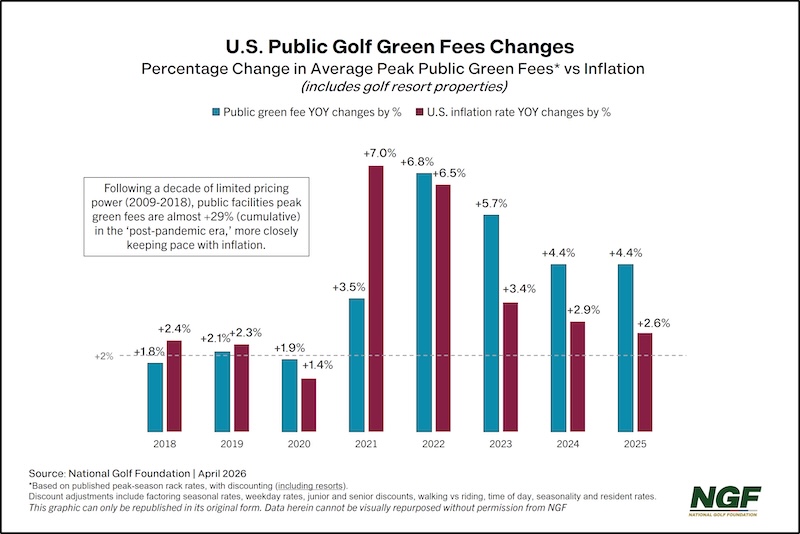
Between 2019 to 2025, as rounds-played at courses in the United States climbed to record levels, peak 18-hole public playing fees have increased by roughly 29%. That’s almost lock-step with the 27% cumulative rise in inflation over the same period.
At a macro level, this indicates golf has largely kept pace with the cost of living rather than dramatically outpacing it, even at a time when operators have unprecedented pricing power and many have been investing their added revenue into improving courses and clubhouses.
When comparing golf within the broader landscape of discretionary spending (and staying in the world of entertainment and sport), consider that the average movie ticket price has jumped roughly 75% over the past six years while the average cost to attend an NFL game has risen around 50% over that same period.
Prices to attend games for certain teams and movies in certain cities or states fluctuate significantly. The same is true with golf – and the gap is most prominent at the high end of the market, specifically destination golf. Fuelled by record or near-record levels of golf travel and sustained demand for experiential leisure, average resort green fees have climbed about 36% since 2019. Today, more than half of US golf resorts in the National Golf Foundation’s (NGF) facility database have peak-season rates above US$100.
That said, those numbers don’t reflect what most golfers actually pay. Resort pricing is dynamic, with discounts tied to seasonality, time of day, replay rounds, local or resident rates, and more. In golf-rich sunbelt states like Florida and Arizona, the spread between peak season rates and off-peak summer pricing at resorts can be especially wide when temperatures soar.
Meanwhile, public golf cost increases have been less pronounced at the local level – the backbone of the game for most recreational players. The average 18-hole green fee for municipal and daily-fee courses (approximately US$41) has risen 27% since 2019, meaning the core product has remained in line with inflation rates.
Ultimately, narratives about rising costs in the world of golf may be more indicative of where golfers are choosing to play (and spend) for their experience. That distinction is important. While the visibility of high-end pricing may shape perceptions, the reality is that golf’s cost structure is far more balanced – particularly for everyday golfers.