Philippine Open Powers onto International Stage
Posted on April 2, 2026
Manila, Philippines: A new era will dawn for Asia’s eldest national Open when the BingoPlus Philippine Open tees-off at ...

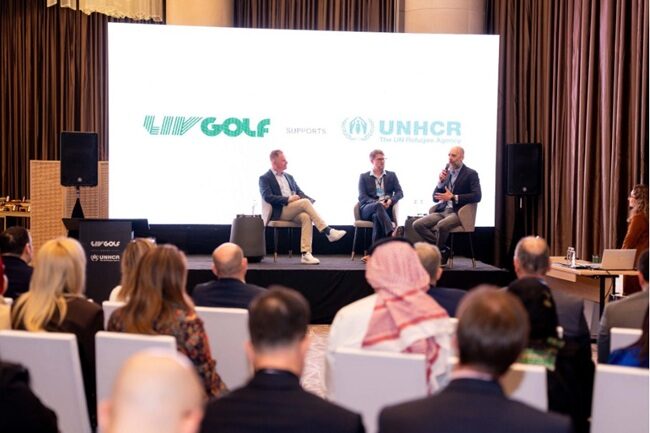
Riyadh, Saudi Arabia: LIV Golf and UNHCR, the UN Refugee Agency, came together in the capital city of Saudi Arabia for a dedicated panel session to reinforce their shared commitment to supporting displaced communities worldwide.
Entering the second year of a landmark three-year, US$10 million commitment – the first-ever golf partnership in UNHCR history – the session provided a comprehensive update on the mission to improve the quality of life for people in refugee contexts.
In the first year, the partnership is already making a meaningful difference in refugee communities across the globe. More than 8,300 refugees and host community members across four continents attended sport and play-based golf activities meant to help restore and improve their well-being and foster a sense of belonging.
The positive energy and impact of sport extends beyond the course, with over 370,000 more people supported indirectly, including families, classmates and entire communities.
This global effort is rooted in UNHCR’s ‘Sport for Protection’ framework, a specialised methodology that uses play-based activities to foster social cohesion and mental well-being in displacement settings.
“Coming into 2026, we have deep foundations across our business that allow us to take several steps forward, quickly,” said Jake Jones, LIV Golf Senior VP of Impact & Sustainability.
“Year one was about establishing the basics and understanding how golf could work in a refugee setting. We’ve now proven that golf makes a difference to their lives positively. In years two and three, we now get to increase the scale and the scope of our work,” added Jones.
The panel, which included a keynote from Regional UNHCR Deputy Representative Dr Nadjia Hafsa and an introduction by LIV Golf Chief Operating Officer Lawrence Burian, highlighted how these projects have been successfully integrated into community centres, schools, and refugee camps across six pilot countries over the past 12 months.
Taleb Salhab, UNHCR’s Chief of Private Sector Partnerships & Philanthropy in the MENA Region, emphasised the strategic nature of the collaboration.
“This is a critically important one-of-a-kind global partnership in sport. Golf helps bring communities together and build valuable skills amongst refugees. We hope at the end of the three years, we will see the impact of this partnership and will have laid the foundation to scale this all over the world,” said Salhab.
A central pillar of this lasting infrastructure is the development of a first-of-its-kind ‘Golf Protection Toolkit’. This replicable guide allows local leaders to implement trauma-informed sport programming independently, a move Stephen Reynard, UNHCR’s Global Head of Sport, described as vital during the current global humanitarian funding crisis.
Reynard said: “The support from LIV Golf is helping us provide life-saving services to the people we serve. We’re in the process of rolling out a golf toolkit with golf-inspired games to offer refugees a healthy distraction, some of whom have lived through traumatic experiences after being forced to flee from their homes. This partnership is really unlocking the power of golf for refugees around the world.”